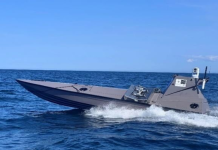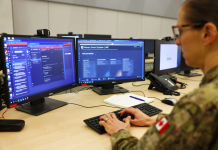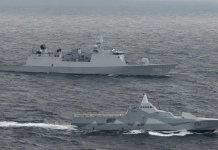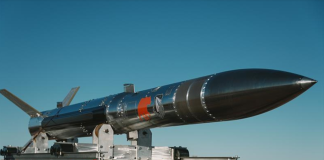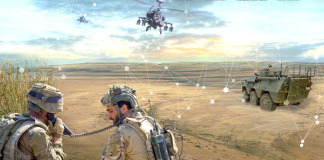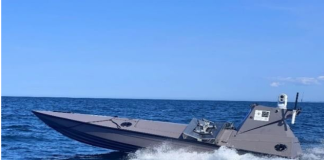
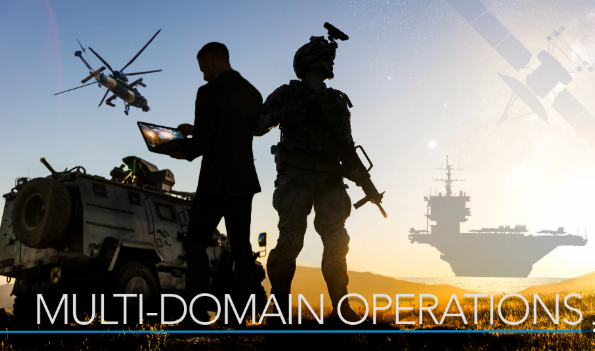
The contemporary operational environment is characterized by increasing complexity and the blurring of traditional linear domain boundaries. In response, NATO has formalized the concept of Multi-Domain Operations, defined as: “the orchestration of military activities, across all operational domains and environments, synchronized with non-military activities, to enable the Alliance to create converging effects at the speed of relevance”.
The road to the Multi-Domain Operations concept
The evolution of military thought and strategy has progressed through several key phases, each building on or reacting to the previous one. Modern 20th-century Warfare emphasized industrial-age concepts such as mass mobilization, attrition, and large-scale conventional operations. This doctrine shaped Command and Control structures that are still in place today.
Emerging from the information technology revolution, Network-Centric Warfare sought to leverage information technology to coordinate actions more effectively than the adversary and achieve a decisive advantage.
As potential adversaries adapted, they began employing hybrid tactics, combining military and non-military means, and violent and non-violent activities. In response, the United States and its allies have developed the concepts of Multi-Domain Operations and Joint All-Domain Operations, recognizing that warfare is no longer confined to the traditional domains of air, land, and sea but extends into space, cyberspace, and the information environment.
Both Russia and China have been studying and adapting to these developments. Russia refers to Multi-Domain Operations as “multi-sphere operations” and focuses on aerospace and informational dimensions, emphasizing precision strikes and information warfare. China seeks to integrate advanced technology with its strategic culture, emphasizing a system-of-systems strategy to defeat a technologically superior opponent through a variety means, such as legal tools, political or economic means.
The shift from traditional warfare to concepts such as “hybrid” (Russia), “unrestricted” (China), Network-Centric Warfare and “5th and 6th generation” (United States) reflects a growing emphasis on information, integration, and adaptability across all domains. Furthermore, as illustrated by J. Warden’s Five-Ring model, this involves effects not only on fielded military but also on population, infrastructure, organic key production assets and leadership. Even if some actions are not compliant with NATO’s ethos, the Alliance has to be prepared as its potential adversaries might behave differently.
Navigating Increasing Complexity and Non-Linearity
The initial Air-Land Battle frameworks were designed for the European Cold War theatre, assuming a relatively continuous line of contact separating well defined areas under either friendly and enemy control, as well as a separation between close, deep and rear areas. This is a linear view of the battlefield, which does not cope with situations where the enemy’s forces are arrayed in depth and friendly forces must go deep to fight them. Where depth is present, manoeuvre warfare needs to employ non-linearity to achieve a physical or moral advantage over their opponent.
Applying nonlinear system theory provides a more accurate framework for understanding modern warfare. This challenges linear thinking, where increased force or actions do not always yield proportional or predictable effects, and emphasizes adaptability, unpredictability, and the consideration of complex interactions within the warfighting environment.
Success depends heavily on the ability to adapt to the evolving situation and the adversary’s actions. Unpredictability, illustrated by sensitivity to initial conditions, limits the effectiveness of rigid, pre-determined plans. Warfare becomes a continuous process of optimizing position within a dynamic “fitness landscape” influenced by all participants. The objective shifts towards not only finding one’s own optimal state but also manipulating the fitness landscape to the adversary’s disadvantage.
By creating collaborative effects across all domains, Multi-Domain Operations aims to present adversaries with multiple, simultaneous dilemmas. This departs from predictable, sequential actions and leverages technology to achieve enhanced simultaneity across the interconnected physical, digital, and human domains.
Re-evaluating the “Observe, Orient, Decide, Act” Loop for Non-Linear Operations
Boyd’s “Observe, Orient, Decide, Act” loop requires adaptation for the non-linear modern battlespace. The focus shifts from solely achieving faster and more accurate individual loops to prioritizing the synchronization of effects and simultaneous attacks on high-value targets. This involves interconnecting loops across domains, leveraging Artificial Intelligence and automation to manage the speed of events, and dynamically reconfiguring communication links.
The objective is to get inside the adversary’s “Observe, Orient, Decide, Act” loop and remain there by creating uncertainty and mismatches between their perceptions and reality through variety and rapidity of response. If one looks at Boyd’s original drawing, the “Observe, Orient, Decide, Act” loop is strictly centred on one’s cognitive process and the adversary’s behaviour is only apprehended through the observation part and the feedback due to action. Whereas here, we envisage nested loops, on both sides, that intertwine. The strategic aim is to disorient and paralyze the adversary by rapidly and irregularly shifting between states within the fitness landscape. This is achieved by identifying and manipulating crucial control parameters that influence the nonlinear system’s behaviour.
The Operative Level: The Linchpin of Multi-Domain Operations Execution
The operational level is where capabilities from different domains truly come together to achieve strategic goals. As such it combines joint and combined resources, processes, and authorities to enable convergence, and should bridge domains and services, overcome cultural biases or organizational structures that lead planners to focus on solutions employing forces from their primary domain.
Thus, it is the crucial link between the strategic and tactical execution of Multi-Domain Operations, providing synthesis and coherence of effect integration between all command levels, translating strategic objectives into effects and manoeuvres across the theatre, and ensuring the synergy of tactical actions. It is also its metronome, as it realizes the synchronization of processes and temporalities defined by permanent command structures.
In essence, the operative level is the linchpin of Multi-Domain Operations, providing the integration, synchronization, and adaptability needed to achieve success in a complex and dynamic environment.
Adaptive Networks of Networks
Operating effectively in non-linear environments requires the ability to understand and adapt to a constantly changing operational picture. Modern Command and Control systems must evolve to handle the complexity and dynamics of Multi-Domain Operations, delegating decisions to the lowest operationally competent level, and shifting the traditional principle of centralized control and decentralized execution towards a distributed control approach that adapts to operational changes.
Obviously, technology is a generation ahead of military control and command organizations. Distributed systems with adaptive networks, such as Software-Defined Networks and Software-Defined Mobile Networking, offer solutions by implementing protocol features in software, maximizing the use of generic hardware and enabling centralized control.
Adapting Command and Control organizational structures is mandatory to leverage such technologies. A way ahead should be to use Modelling and Simulation within wargames to analyze various Multi-Domain Operations Command, Control and Communication structures.
Conclusion: Digital Capabilities as the Enablers of Multi-Domain Operations
Digital capabilities are clearly a game changer.
Concerning connectivity, technology allows merging formerly segregated networks of different operational domains, aiming at a seamless unified network with even interoperability with civil communication systems. This can only be leveraged through a shift from a network-centric to a data-centric approach.
Cloud-based technologies allow sharing data easily, and provide the agility and scalability required by Multi-Domain Operations. Future multi-domain combat clouds will lift current combat management systems to higher levels of interconnected edge and central traditional cloud-based systems, sharing computational power, functionality, and information.
Artificial Intelligence is integral to managing the vast amounts of multi-domain data from interconnected sensors, platforms and systems, and to speeding up decision-making processes. Furthermore, it can be oriented to evaluate adversary actions and predict multiple Multi-Domain Operations threat outcomes.
Current technologies can build up a different Command and Control, with distributed networks properly synchronized in space and time, allowing units to work offline and re-join networks later, instead of relying on a single centralized commanding node, which is a vulnerable target. This requires new doctrinal concepts that enhance flexibility in decision-making with more granularity and redundancy, where even horizontal Command and Control should be considered to provide required flexibility and decision-making speed, especially in uncertain environments.
Finally, cross-domain secure sharing mechanisms are essential, given the increased interconnectedness. A Zero Trust architecture is highlighted as an effective approach to ensure overall cybersecurity and safety in multi-national joint operations and the upcoming multi-domain combat clouds.
To conclude, digital transformation for Multi-Domain Operations is about creating a highly integrated, data-driven, and automated environment across all warfighting domains, leveraging advanced technologies and distributed architectures to achieve faster decision cycles and synchronized effects against adversaries.