Together with TIDE Sprint, TIDE Hackathon, and iO360, CWIX is part of the Interoperability Continuum, an Allied Command Transformation-led series of events designed to promote continuous improvement for digital interoperability.
What Is Interoperability?
At its core, interoperability is the ability of different systems, organizations, and nations to work together coherently, effectively, and efficiently. Within NATO, it encompasses far more than simply plugging in the same equipment or using compatible software. It means aligning doctrine, training, procedures, and culture across thirty-two diverse member nations — and trusted partners — to ensure collective military effectiveness.
Interoperability effectiveness depends on alignment in three core areas:
- Technical interoperability: Can systems and networks exchange data in real time?
- Procedural interoperability: Are tactics, techniques, and procedures aligned?
- Human interoperability: Do people speak a common language of operations, trust each other, and train together?
Consider a joint operation involving a Norwegian radar system, a German air defence unit, and a Dutch command post. Without interoperability, those components cannot function as a cohesive whole. But when interoperability is achieved, these capabilities multiply each other’s effect, producing faster decisions, better outcomes, and fewer risks.
Why Does Interoperability Matter to NATO?
For NATO, interoperability is not a convenience. It is a strategic necessity.
The Alliance’s greatest strength lies in its ability to act as a unified force — politically and militarily — despite its national diversity. But unity without interoperability is hollow. NATO missions depend on forces from multiple nations working together on short notice, often under intense operational pressure. Whether delivering air policing, deterrence along the eastern flank, or cyber defence, success hinges on the seamless integration of Allied capabilities.
In today’s security environment, which spans five operational domains (land, air, maritime, space, and cyberspace), interoperability underpins everything from logistics planning to real-time targeting. Without it, a multinational force cannot share data, synchronize actions, or adapt quickly. In practical terms, interoperability saves lives, prevents mission failure, and strengthens deterrence.
How Is NATO Delivering Interoperability Today?
Interoperability is not something you declare. It is something you test, verify, and continuously refine.
That is why NATO invests heavily in exercises like the Coalition Warrior Interoperability eXploration, eXperimentation, eXamination eXercise, or CWIX — held annually at the Joint Force Training Centre in Bydgoszcz, Poland. Executed by Allied Command Transformation, CWIX brings together more than 2,700 operators, engineers, and specialists from over 40 Allies and partner nations.
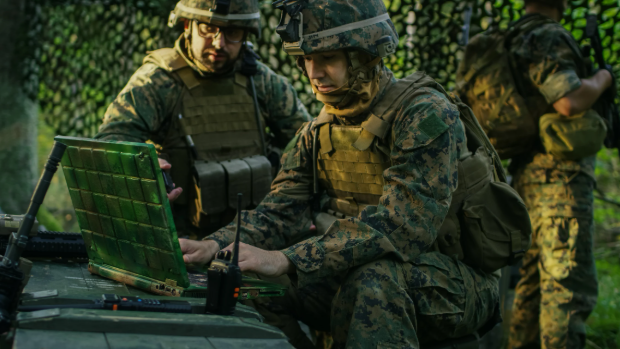
For three weeks, participants stress-test more than 600 digital systems and Command-and-Control capabilities across 18 focus areas. These range from battlefield communications systems with multi-domain situational awareness, to medical logistics like patient tracking software.
The goal is to de-risk capabilities before they are needed in the field. Nations engage in collaborative “try-fail-fix” cycles to ensure their technologies are aligned with NATO’s evolving interoperability standards. These standards, developed under initiatives like Federated Mission Networking, provide a common baseline for how Allied systems must operate together from day one of a mission.
CWIX also integrates real-world operational lessons. The war in Ukraine has provided sobering evidence of the importance of rapid information sharing, secure networks, and cross-domain coordination. Ukraine’s battle-tested systems — such as the DELTA command platform — are now part of CWIX testing environments, helping NATO adapt and prepare.
What Role Does Allied Command Transformation Play?
Allied Command Transformation, based in Norfolk, United States, is NATO’s strategic warfare development command. Its mission: to anticipate change, harness innovation, and ensure NATO remains ready, resilient, and united.
Interoperability is one of the Command’s core mandates. As the lead for CWIX and the champion of Federate Mission Networking, Allied Command Transformation ensures interoperability is not an afterthought but a foundational design principle for all NATO operations and capabilities. Allied Command Transformation performs this role in several ways:
- Standards and Policy: the Command coordinates the development of interoperability specifications that nations use to align their capabilities.
- Experimentation and Validation: Through CWIX and other venues, Allied Command Transformation validates that national systems are not just compliant — but effective when integrated.
- Partnership Engagement: the Command works with industry, academia, and partner nations to ensure that emerging technologies — including Artificial Intelligence and space-based assets — are interoperable from inception.
- Education and Training: the Command fosters interoperability in human terms by promoting shared doctrine, common operational language, and multi-national training environments.
Without Allied Command Transformation, NATO would lack a centralized, forward-looking engine to harmonize how interoperability is defined, delivered, and advanced across the Alliance.
What Does the Future of NATO Interoperability Look Like?
NATO’s ambitions are growing. The NATO 2030 agenda calls for a digitally enabled, multi-domain Alliance prepared to operate in a contested information environment. That vision hinges on interoperability by design, embedded into every capability from the moment it is conceived.
Allied Command Transformation is leading this charge. The 2025 edition of CWIX introduces a new “Innovation Sandbox” — a dedicated environment where experimental systems, often supported by NATO’s DIANA accelerator, can be tested for real-world compatibility.
This proactive approach is essential. Retrofitting interoperability is costly, slow, and often impossible. By contrast, designing it from the start — technically, procedurally, and culturally — ensures NATO can respond to tomorrow’s crises with confidence and cohesion.
The Final Takeaway
Interoperability is the hidden architecture that holds NATO’s military power together. It is indispensable. Through CWIX, Federated Mission Networking, and future-focused initiatives, NATO’s 32 nations can act not as separate entities, but as one united force.
That unity is what gives NATO its edge. And it is why interoperability remains one of the most important investments that can be made.