The Marine Corps’ answer to mobile, long-range fires now features a multirocket launch system and autonomous tech.
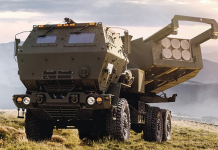
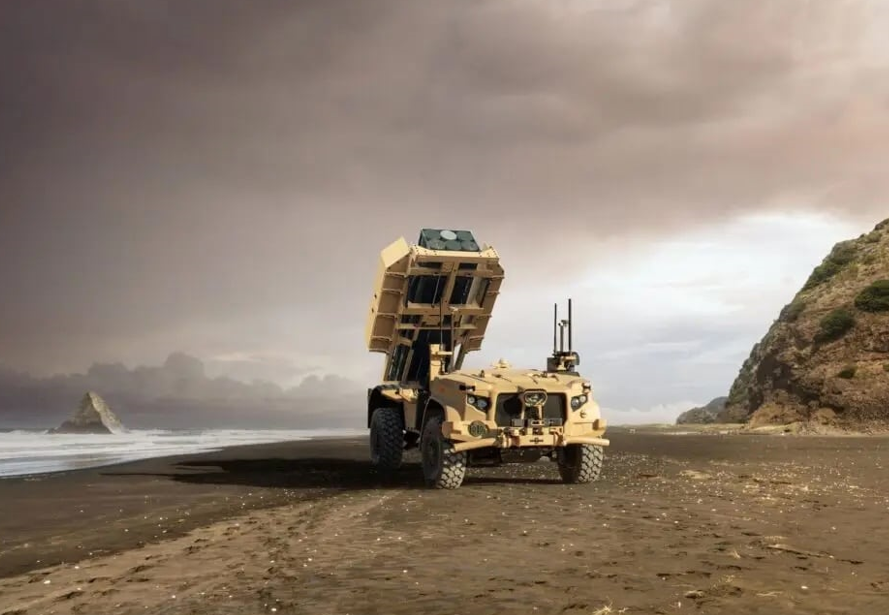
Oshkosh Defense unveiled the newest iteration of the Remotely Operated Ground Unit for Expeditionary Fires, or ROGUE-Fires, at the Association of the U.S. Army’s Global Force Symposium in Huntsville, Alabama, this week.
“As the battlefield continues to evolve, we are leveraging the mature and proven Oshkosh families of vehicles to design payload-agnostic autonomous platforms that deliver unmatched flexibility, enabling forces to outpace emerging threats and maintain operational dominance,” said Pat Williams, chief programs officer at Oshkosh Defense.
The Marines first awarded a $40 million contract to Oshkosh to build the unmanned missile launcher after a prototyping phase ended in September 2023.
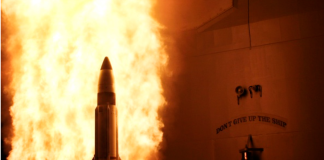
Until this newest variant, the focus of the ROGUE-Fires platform had been to house the Naval Strike Missile, the Marines’ key to knocking out enemy ships to protect and gain access for U.S. Navy ships in littoral regions.
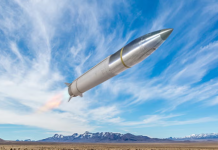
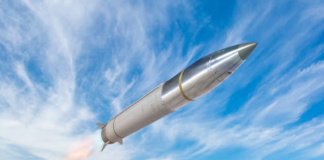
The multiple launch rocket system family of munitions, or MFOM, gives the platform a new capability on top of existing features such as long-range precision fires, autonomous resupply, and logistics operations.
The company has also developed a powertrain that can be adapted for hybrid-electric power, which allows for silent modes of operation and fuel savings as well as electrical charging for devices and other platforms.
The original concept evolved out of a previous program known as “leader follower,” which uses autonomy to drive ground vehicles.
The Army used the same software in the ROGUE platform for its own autonomous driving in both the Expedient Leader Follower and Autonomous Ground Resupply programs, according to a 2021 Army release.
The software allows for one manned vehicle to lead a series of unmanned vehicles in a convoy operation.
The AutoDrive system gives the ROGUE Fires Oshkosh-built vehicle off-road, self-driving technology in “nearly any environment,” which moves “beyond Leader-Follower capabilities,” Forterra said in a Jan. 13 statement.
The first test fire of the Naval Strike Missile from the platform happened in June 2020. The project sought to give Marines the punch needed for long-range, anti-ship fires on a platform more mobile and able to hit moving targets than the legacy High Mobility Artillery Rocket System, or HIMARS.
The missile has a range beyond 750 kilometers, which aligns with Marine warfighting concepts in which Marine units, some platoon or squad-sized, seize terrain for short periods and conduct sea control and sea denial for naval commanders.