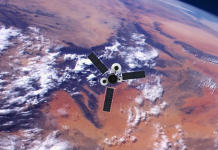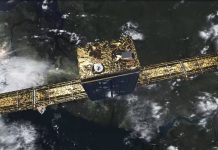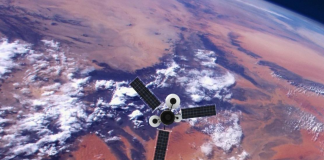

The National Aeronautics and Space Administration’s (NASA) Earth Science Technology Office is seeking submissions for the agency’s Space to Soil Challenge, an initiative focused on advancing adaptive sensing and onboard processing technologies for small satellite (SmallSat) missions supporting land resilience applications.
The challenge calls for SmallSat mission concepts that integrate onboard intelligence to enable real-time interpretation of Earth observation data. NASA is emphasizing approaches that move beyond traditional data collection toward responsive sensing architectures capable of adapting to environmental conditions for applications such as regenerative agriculture, sustainable forestry, and land management.
Participants are required to design solutions within the constraints typical of SmallSat platforms, including limited power, compute, and bandwidth resources. Submissions may include hardware, software, or hybrid approaches, with a focus on orchestrating existing land observation algorithms into efficient onboard processing frameworks.
Phasing in
In Phase One, participants must submit a five-page white paper, a two- to three-minute video, and supporting software code or hardware schematics. NASA will evaluate entries based on defined criteria, with up to 10 finalists selected approximately three weeks after the submission deadline to present at a live pitch event scheduled for July 2026.
During Phase Two, finalists will present their concepts to a panel of judges. Up to three winners will each receive $100,000 and an invitation to participate in a follow-on incubator program. Up to two runners-up will receive $25,000 each.
Phase Three consists of a 10- to 12-week incubator program designed to support further development of winning concepts, along with follow-up assessments conducted 12 months after the pitch event to evaluate research progress and potential implementation.