The NATO–Ukraine Joint Analysis, Training and Education Centre, in short JATEC, has rapidly become a central force in NATO’s innovation ecosystem, connecting urgent battlefield needs to agile technological responses. In direct coordination with Allied Command Transformation, JATEC is translating operational reality into accelerated capability development, aligning the competition’s focus with urgent operational threats faced by Ukraine.
Where We’re Coming From: Bridging the Gap Between Combat and Innovation
The NATO Innovation Challenge, organized in Bydgoszcz, Poland, and organized by Allied Command Transformation and JATEC, focused on countering Russian glide bombs, high-speed, precision-guided threats causing immense destruction. For the first time, Ukrainian combat officers served on the jury, injecting real-time frontline experience into NATO’s innovation framework. Their participation was instrumental in selecting the three most promising solutions: a subsonic interceptor drone (TYTAN), an AI-based trajectory prediction module (Alta Ares), and an autonomous drone wall (ATREYD).
Colonel Valerii Vyshnivskyi, Senior National Representative of Ukraine to JATEC and Director of Programme Implementation, emphasized the importance of this step: “These are the issues that must be solved for success on the battlefield and the JATEC team is actively working on it.” Solutions selected from the March challenge are now undergoing testing, with the goal of transferring them to Ukrainian forces for operational deployment.
The selected solutions are now entering field testing in France, with support from the French Ministry of Armed Forces and the Direction Générale de l’Armement, notably at the Centre d’Essais des Landes in Biscarrosse. These tests will simulate real operational conditions.
This timeline, barely 10 weeks from concept to field trial, represents a radical acceleration of the typical development process. As a result, SACT and JATEC are demonstrating a new model of responsive innovation at mission speed.
This timeline, barely 10 weeks from concept to field trial, represents a radical acceleration from the typical development cycle. As a result, Allied Command Transformation and JATEC are demonstrating a new model of responsive innovation at mission speed.
Where We Are Today: Confronting the Fibre-Optic First Person View Drone Threat
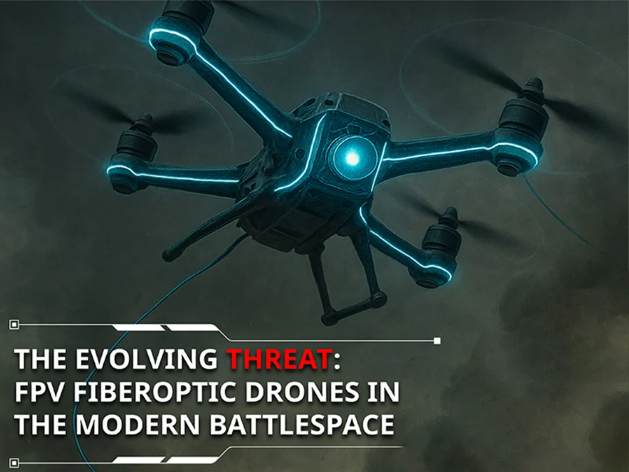
Building on this momentum, JATEC and Allied Command Transformation are leading the next Innovation Challenge in Tallinn, Estonia, later this month. This iteration confronts one of the most urgent and complex battlefield threats: fibre-optic-controlled First Person View drones. Immune to conventional jamming due to their physical tethering, these drone platforms present unique challenges to front-line units and current countermeasures.
The NATO Innovation Challenge in Tallinn has already drawn unprecedented attention. A total of 162 submissions were received, the highest number in the history of the Innovation Challenge across all 17 iterations. This marks a significant increase even from the previous event in March 2025, which received 40 submissions. Additionally, 42 of the current proposals were submitted by Ukrainian stakeholders, highlighting the growing integration of local expertise into NATO innovation pipelines. By the end of the Challenge, 10 of the most relevant candidates will be selected for further consideration, with two Ukrainian experts participating in the evaluation process.
The topic to be addressed at this 17th edition of the NATO Innovation Challenge is to find deployable and affordable countermeasures to fibre-optic-controlled First Person View drones. This would involve systems that can detect, track, and neutralize these drones within a 6-month implementation window. More than a competition, the challenge serves as a joint operational and innovation campaign, directly shaped by JATEC’s Senior Advisory Board, which convened in Kyiv in April 2025 where NATO and Ukrainian defence leaders reviewed and approved several focused initiatives. The prioritization of drone and glide bomb countermeasures in these discussions underscores JATEC’s central role in linking NATO innovation to battlefield outcomes.
What’s Next: From Prototype to Battlefield
JATEC’s model, pairing Ukrainian end-users, NATO innovators, and field-testing pathways, is paving the way for faster and more impactful results for the Alliance. The work of JATEC reflects the broader intent of Allied Command Transformation: to drive capability development that is both interoperable and immediately relevant. As the first joint civil-military institution between Ukraine and NATO, JATEC exemplifies how trusted partnerships and operational urgency can accelerate innovation.
Near-term goals include:
- Testing high-precision visual targeting systems during upcoming missile trials;
- Evaluating which systems offer the best balance between effectiveness and cost, based on what Ukrainian forces need most;
- Fast-tracking the handoff from lab to battlefield by moving technologies into production—ideally within Ukraine or nearby.
One of the important aspects the NATO Innovation Challenge demonstrates is that interoperability is not a luxury, but a requirement. Innovative solutions must not only work, but they must also integrate seamlessly with NATO’s evolving digital battlefield. Familiarity with NATO processes, procedures and communication protocols are critical enablers, particularly for systems intended for mass deployment under joint command structures.
The two 2025 Innovation Challenges demonstrate the shared commitment of Allied Command Transformation and NATO-Ukraine Joint Analysis Training and Education Centre to speed, operational relevance, and coalition advantage. More than competitions, these efforts reflect NATO’s determination to develop solutions alongside those confronting the threat every day, ensuring innovation stays tightly linked to the mission and rapidly reaches those on the front lines. The upcoming 17th NATO Innovation Challenge continues this momentum, focusing the Alliance’s best ideas on the most urgent challenges facing the battlefield today.